Every year, thousands of entrepreneurs launch startups with ambitious ideas and high expectations. They invest countless hours refining business concepts, developing products, and preparing for success. Yet despite their passion and determination, many of these ventures fail within the first few years.
The common assumption is that startups collapse because of limited funding or intense competition. While these challenges certainly play a role, they are rarely the primary reason.
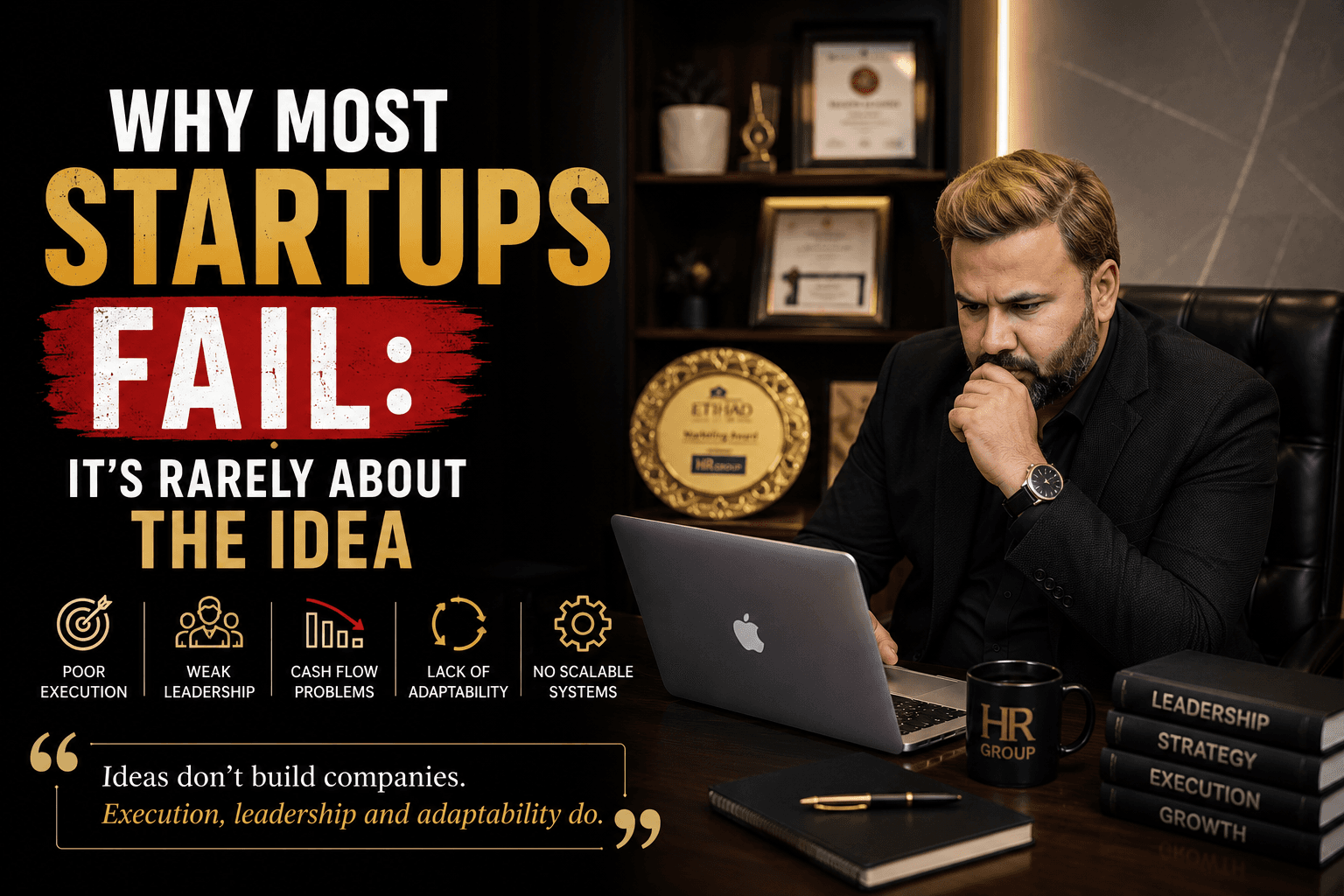
In my experience, startups are far more likely to fail because they struggle with execution, leadership, financial discipline, and the ability to adapt when reality differs from the original plan.
An Idea Is Only the Starting Point
Every successful business begins with an idea.
However, ideas alone have never built successful companies.
Many entrepreneurs become emotionally attached to their concepts, believing originality alone guarantees success. They spend months protecting their ideas instead of validating them in the market and understanding whether customers truly need what they are building.
The reality is much simpler.
Customers don't invest in ideas—they invest in solutions that solve real problems. Businesses that consistently execute, improve, and respond to customer feedback will almost always outperform businesses that simply have better ideas.
"Ideas create possibilities, but execution creates businesses. The market rewards those who deliver value—not those who simply imagine it."
Value Always Comes Before Revenue
One of the biggest mistakes entrepreneurs make is focusing on making money instead of solving meaningful problems.
Revenue is not the starting point of a successful business. It is the outcome of creating value that customers genuinely appreciate.
Companies that understand customer pain points and continuously improve their products or services naturally build stronger relationships, greater trust, and sustainable growth.
Instead of asking, "How can I sell more?" successful entrepreneurs ask, "How can I create more value?"
That simple shift in thinking often determines the future of a business.
Leadership Becomes the Competitive Advantage
As businesses grow, leadership becomes one of their greatest competitive advantages.
Founders are expected to make difficult decisions, manage uncertainty, build capable teams, and communicate a clear vision during both success and adversity.
Leadership is not about having every answer.
It is about creating confidence when uncertainty exists, maintaining composure under pressure, and empowering others to perform at their highest potential.
Strong businesses are rarely built by great products alone.
They are built by great leaders.
Cash Flow Determines Survival
One of the most common misconceptions among first-time entrepreneurs is believing that increasing revenue automatically means building a healthy business.
Revenue may indicate growth.
Cash flow determines survival.
Many startups generate impressive sales while struggling to manage operational expenses, salaries, supplier payments, and day-to-day financial obligations.
Sustainable businesses understand that financial discipline is just as important as customer acquisition.
Growth without healthy cash flow often creates unnecessary risk.
Build Systems That Can Scale
Many entrepreneurs believe they need to be involved in every decision.
While this approach may work during the early stages, it eventually becomes one of the biggest barriers to growth.
Successful companies are built on systems rather than dependency.
Clear processes, defined responsibilities, and empowered teams allow organizations to operate efficiently without relying on one individual for every decision.
Delegation is not about giving away responsibility.
It is about building an organization capable of growing beyond the founder.
Continuous Learning Is Essential
Markets continue to evolve.
Technology reshapes industries.
Customer expectations become increasingly sophisticated.
Entrepreneurs who stop learning eventually stop growing.
The most successful business leaders remain curious throughout their careers. They seek feedback, study industry trends, embrace innovation, and continuously improve their decision-making.
Learning is no longer optional.
It has become one of the strongest competitive advantages in modern business.
Success Requires Patience
Building a respected company takes time.
Behind every successful brand are years of discipline, setbacks, difficult decisions, and continuous improvement.
Entrepreneurship is not a sprint.
It is a long-term commitment to learning, adapting, and consistently moving forward.
Businesses that prioritize resilience, consistency, and long-term thinking almost always outperform those searching for shortcuts.
Final Thoughts
Most startups do not fail because of bad ideas.
They fail because execution falls short of ambition.
Long-term success is built through disciplined leadership, financial responsibility, continuous learning, and an unwavering commitment to creating value.
Ideas may inspire a business.
Execution is what gives it the opportunity to endure.